Pancit Canton (Filipino Stir-Fried Noodles)
Stir-fried noodles for long life — a birthday and fiesta staple
By Sam · Published July 3, 2026 · Updated July 21, 2026
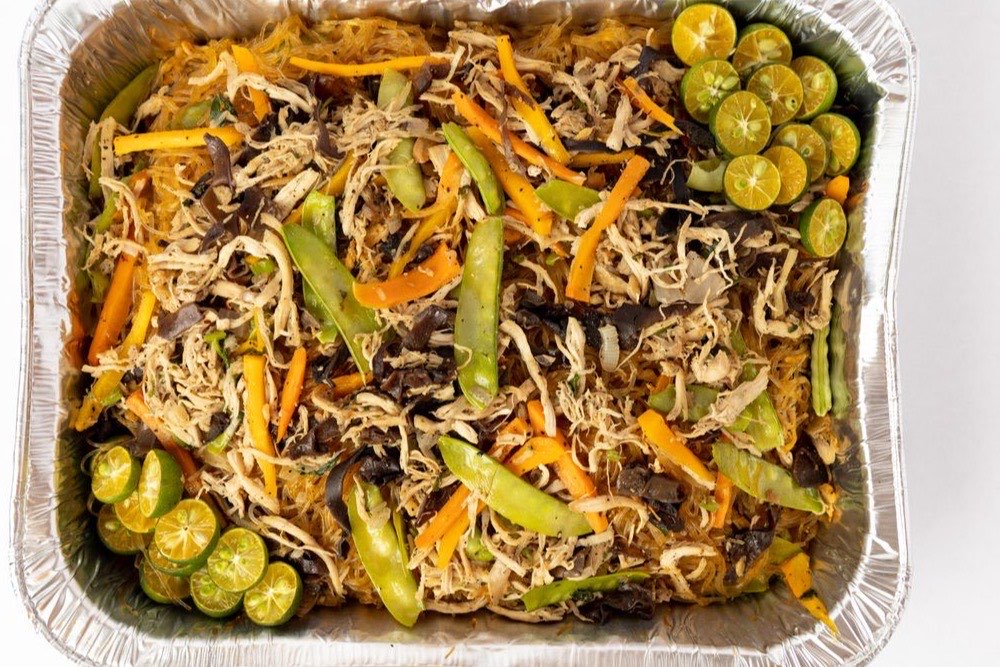
Pancit canton is the noodle dish served at nearly every Filipino birthday, because long noodles symbolize long life. Flour-and-egg canton noodles are stir-fried with a mix of meat, seafood, and vegetables, then finished with a squeeze of calamansi. It is endlessly flexible — use whatever proteins and vegetables you have.
Ingredients
- 250 g pancit canton (flour) noodles
- 200 g pork, thinly sliced
- 1 chicken breast, thinly sliced
- 100 g shrimp, peeled
- 2 cups cabbage, shredded
- 1 carrot, julienned
- 1 cup snap peas or snow peas
- 1 onion, sliced
- 3 cloves garlic, minced
- 3 tbsp soy sauce
- 1 tbsp oyster sauce
- 2 cups chicken broth
- Calamansi or lemon wedges, to serve
Instructions
- In a wide pan or wok, sauté the garlic and onion, then add the pork and chicken and cook until no longer pink.
- Add the shrimp and cook briefly, then pour in the chicken broth, soy sauce, and oyster sauce. Bring to a simmer.
- Add the carrot, snap peas, and cabbage and cook just until crisp-tender. Scoop out about half the vegetables and set aside so they stay bright.
- Add the canton noodles to the simmering broth and toss continuously until they absorb the liquid and soften, 3 to 5 minutes.
- Return the reserved vegetables, toss to combine, and serve hot with calamansi on the side.
Curious which Filipino dish matches your personality? Take the Pinoy Food Personality Test or browse the full Filipino Food Guide.
Ingredient Notes
Canton noodles are wheat and egg, and they behave nothing like rice noodles. They come dried in nests, are thicker than most stir-fry noodles, and have a distinct springy chew. Look for packets simply labelled "pancit canton" in Filipino or Asian groceries; Chinese lo mein or Hong Kong pan-fry noodles are the closest substitutes and work fine. What does not substitute is bihon (rice vermicelli) — it hydrates far faster and will disintegrate if you cook it for the time canton needs.
The broth is the seasoning. Because the noodles cook by absorbing liquid rather than by boiling in water you throw away, whatever is in the pan ends up inside the noodle. This means the broth needs to taste slightly stronger than you want the finished dish to be. Use real chicken stock if you have it; a bouillon cube dissolved in water is what most Filipino kitchens actually use and it is perfectly legitimate here. Oyster sauce supplies the savoury depth and a little sweetness that soy sauce alone cannot; without it the dish tastes thin and salty.
Slice the proteins thin and against the grain. Everything in a stir-fry cooks in minutes, so thickness is what determines whether the pork is tender or chewy. Freezing the meat for twenty minutes first makes thin slicing much easier. The shrimp go in near the end and need barely a minute — they finish cooking in the residual heat, and shrimp that curl into tight rings have already gone too far.
Cut the vegetables to match their cooking times. Carrot julienned fine, cabbage shredded, snap peas left whole. This is not aesthetics — it is the only way for everything to reach crisp-tender at the same moment. Calamansi at the table is not a garnish either. Its sharp, floral acidity cuts through the soy and oyster sauce and is the difference between a plate of noodles and pancit.
Common Mistakes
Adding all the broth at once. The recipe calls for two cups, but the noodles may want less depending on the brand and how dry they are. Pour in about two-thirds, toss, and add the rest only if the noodles are still stiff. Too much liquid at the start leaves you with soup, and there is no way to take it back out.
Cooking the vegetables all the way through in the pan. They keep cooking in the residual heat and again on the serving platter. Cabbage that looks perfect in the wok is grey and limp by the time it reaches the table. Pulling half the vegetables out and returning them at the end, as the recipe does, is the standard fix and it works.
Using a pan that is too small. Pancit for five people is a lot of volume. In a crowded pan the noodles steam instead of tossing, break apart under the stirring, and cook unevenly. Use the widest pan or wok you own, or cook in two batches.
Stirring with a spoon. Canton noodles are sturdy but not indestructible, and a spoon chops them as you toss. Tongs or two long implements let you lift and fold the noodles instead of cutting through them — and long, unbroken noodles are the point of the dish.
Letting it sit before serving. Pancit is at its best within a few minutes of the noodles finishing. It will hold on a buffet table, but every minute past that the noodles keep drinking whatever moisture is left and drift toward dry.
Variations
Pancit is less a recipe than a category. Pancit bihon uses fine rice vermicelli and cooks faster and lighter. Pancit bam-i, from Cebu, mixes canton and bihon in the same pan, giving you both textures at once. Pancit palabok is a different animal entirely — thick rice noodles under a shrimp-and-annatto sauce, topped with chicharrón, egg, and smoked fish. Pancit malabon is its richer, seafood-heavy cousin.
Within canton itself, the proteins are open. Chinese sausage, squid, liver, quail eggs, fish balls, or a purely vegetable version all fit. Some households add a splash of the calamansi directly into the pan at the end rather than serving it on the side. Browse the Filipino Food Guide for how pancit fits alongside the other fiesta dishes.
Serving, Storage & Make-Ahead
Serve pancit hot on a wide platter with calamansi or lemon wedges scattered around the rim so people can squeeze their own. Filipinos eat pancit with rice, which surprises people who assume noodles are already the starch — at a fiesta, pancit is one dish among many rather than the meal. Bread rolls (pandesal) alongside pancit is another common pairing, particularly at merienda.
Leftovers keep three to four days refrigerated. Reheat in a pan over medium heat with a splash of broth or water to loosen the noodles, which will have tightened and stuck together. The microwave works in a pinch but heats unevenly and dries the edges. Pancit does not freeze well; the noodles turn soft and the vegetables collapse on thawing.
For make-ahead, do the prep rather than the cooking. Slice all the proteins, cut all the vegetables, and mix the broth with the soy and oyster sauce a day in advance. The actual stir-fry then takes under fifteen minutes, which is what you want when the dish is one of six going onto a party table at the same time.
Frequently Asked Questions
Do I need to soak or boil pancit canton noodles first?
No. Dried canton noodles go into the simmering broth straight from the packet and cook there, absorbing the liquid as they soften. Pre-boiling them means they arrive at the pan already fully hydrated, so they cannot take on any of the seasoned broth and they turn to mush within a minute of tossing.
Why did my pancit turn out mushy?
Too much liquid, almost always. Add the broth in stages rather than all at once and stop while the noodles still have a slight chew — they keep softening off the heat. Overcooking the noodles and drowning them are the same mistake seen from two directions.
What is the difference between pancit canton and pancit bihon?
The noodle. Canton is a thick wheat-and-egg noodle with a springy, chewy bite, similar to a lo mein noodle. Bihon is a fine rice vermicelli that is thin, soft, and much lighter. The technique and seasoning are close to identical, which is why many households cook both together and call the result pancit bam-i.
Can I make pancit canton ahead of time?
Partly. The proteins and vegetables can be cooked and the broth seasoned in advance, but the noodles should go in shortly before serving — they continue absorbing liquid as they sit and will soften past their best. Pancit does hold reasonably well on a party table for an hour or two, which is exactly why it is a party dish.
Why is pancit always served at Filipino birthdays?
The long noodles symbolise long life, a belief carried over from Chinese longevity noodles. That is also why tradition holds you should not cut the noodles when cooking or serving them. Whether or not a household takes the superstition seriously, the dish is on the table at essentially every Filipino birthday.
About the author
Sam is Korean, a former MBTI skeptic, and the person who built this site. Not a professional chef or a food historian — an enthusiast who cooks the dishes, does the reading, and cross-checks the history against documented Philippine culinary sources. Corrections are welcome and get made. Read the full story.