Kare-Kare (Oxtail Peanut Stew)
A rich, velvety peanut stew served with fermented shrimp paste
By Sam · Published July 3, 2026 · Updated July 21, 2026
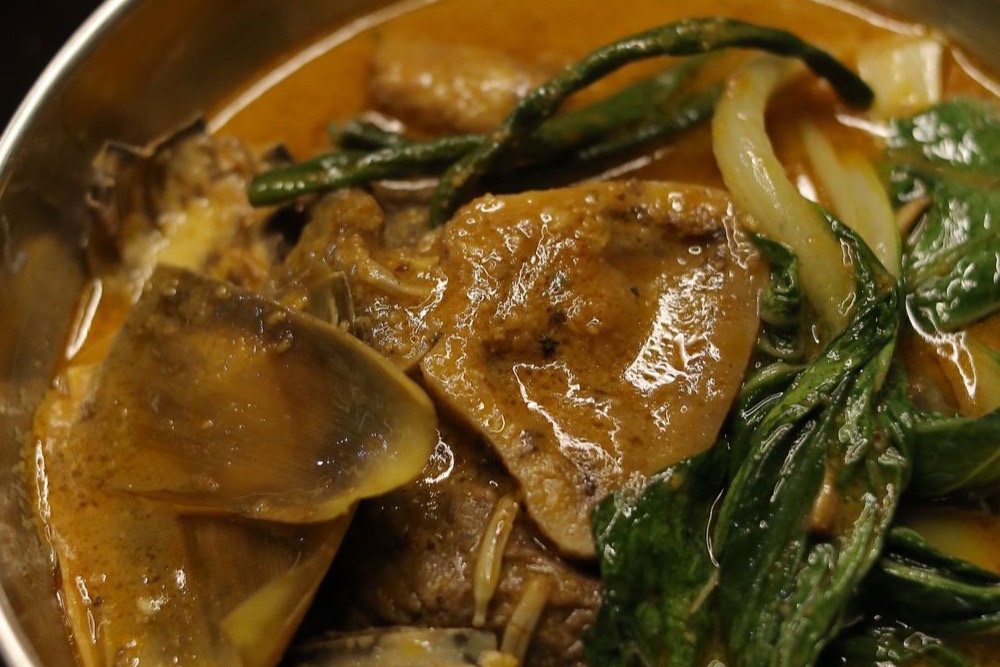
Kare-Kare is a celebration dish: tender oxtail (and often tripe) in a thick, nutty sauce colored gold with annatto. It is rich and mellow on its own, which is exactly why it is served with a scoop of salty bagoong (fermented shrimp paste) on the side — the two together are the whole point. It takes time, but almost all of it is hands-off simmering.
Ingredients
- 1 kg oxtail, cut into pieces
- 3/4 cup peanut butter
- 1/4 cup ground toasted rice (for thickening)
- 2 tbsp annatto (atsuete) powder, or 3 tbsp annatto oil
- 1 banana blossom (puso ng saging), sliced
- 2 eggplants, sliced
- 1 bunch string beans (sitaw), cut into 2-inch lengths
- 1 bunch bok choy (pechay)
- 1 onion, chopped
- 4 cloves garlic, minced
- 2 tbsp fish sauce
- Bagoong (fermented shrimp paste), to serve
Instructions
- Boil the oxtail in enough water to cover until very tender, 2 to 3 hours (or 45 minutes in a pressure cooker). Reserve about 4 cups of the broth.
- In a clean pot, sauté the garlic and onion, then stir in the annatto for color.
- Pour in the reserved broth, peanut butter, and ground toasted rice. Simmer, stirring, until the sauce thickens to a velvety consistency.
- Return the oxtail to the pot and season with fish sauce.
- Add the string beans, eggplant, and banana blossom and cook until tender, about 8 minutes. Add the bok choy last so it stays bright.
- Serve hot with steamed rice and a generous spoonful of sautéed bagoong on the side.
Curious which Filipino dish matches your personality? Take the Pinoy Food Personality Test or browse the full Filipino Food Guide.
Ingredient Notes
Oxtail is worth the cost and the wait. It is almost entirely collagen and bone, which is exactly what you want: three hours of simmering converts that collagen into gelatin, giving you meltingly tender meat and a broth with real body. That broth is not a byproduct — it becomes the sauce, so do not discard a drop of it. Beef shank or short ribs work as a cheaper substitute, though neither gives quite the same silkiness. Traditional versions add tripe, which needs its own long cleaning and boiling; leave it out if you are making this for the first time.
Peanut butter is the modern shortcut, and it is fine. The older method grinds toasted peanuts by hand, and it does taste better — deeper and less sweet. If you use commercial peanut butter, buy the unsweetened natural kind whose only ingredients are peanuts and salt. Sweetened brands will push the sauce in a candied direction that fights the bagoong.
Ground toasted rice is the real thickener, and skipping it is why home versions often come out thin or grainy. Toast raw rice in a dry pan until it is golden and smells nutty, then grind it as fine as you can. It thickens the sauce smoothly and adds a subtle toasted note that peanut butter alone does not provide. Cornstarch is not a substitute — it thickens without contributing flavor and gives the sauce a slick, gluey texture.
Annatto (atsuete) is for color, not flavor. Its job is the characteristic burnt-orange. Powder dissolved in a little broth is easiest; seeds steeped in warm oil and strained give a cleaner result. Use it with restraint — too much turns the sauce muddy and slightly bitter.
Bagoong is not optional and it is not an ingredient. The stew is deliberately mild and mellow; the salty, funky fermented shrimp paste served alongside is what completes it. Sauté it briefly in oil with a little garlic before serving to take the raw edge off.
Common Mistakes
Under-cooking the oxtail. Two hours is often not enough. The meat should pull away from the bone with almost no resistance. If it is still chewy, the collagen has not converted, and no amount of sauce will rescue the texture. A pressure cooker gets you there in about forty-five minutes if you would rather not stand over a pot all afternoon.
Throwing away the cooking broth. This is the most damaging mistake and a surprisingly common one. That liquid holds everything the oxtail released over three hours. Building the sauce with water or stock instead gives you a peanut sauce sitting next to some beef rather than a stew.
Adding bagoong to the pot. It is meant to be balanced bite by bite, on the plate, by each person. Stirred into the stew it makes the whole thing uniformly salty and destroys the contrast the dish is built around.
Letting the sauce catch on the bottom. Once the peanut butter and ground rice go in, the sauce thickens fast and scorches faster. Keep the heat moderate and stir more or less continuously. A scorched peanut sauce tastes burnt all the way through.
Overcooking the vegetables. Banana blossom, string beans, and eggplant want to keep some structure, and the bok choy should go in last and barely cook. Vegetables simmered into softness turn the dish into a uniformly beige stew, which is a shame in something this visually striking.
Variations
Beef shank or short ribs stand in for oxtail at a fraction of the price, and many households use a mix. Kare-kareng bagnet tops the stew with crisp-fried pork belly, adding crunch to a dish that is otherwise all softness. Seafood versions with prawns and mussels turn up in restaurants; they cook in minutes rather than hours, so build the sauce first from a good stock. There is a respectable vegetarian version made with eggplant, tofu, and banana blossom — though you will need a fermented bean paste to stand in for the bagoong.
Regional practice varies on whether to include tripe, how thick the sauce should be, and how heavily to lean on the annatto. For where the dish sits in Filipino celebration culture, see the Filipino Food Guide.
Serving, Storage & Make-Ahead
Serve with plenty of steamed rice and a mound of sautéed bagoong on the side of each plate, not on top. The eating rhythm is deliberate: a little stew, a little rice, a small amount of bagoong, adjusted by the eater. First-timers almost always take too much bagoong at once — mention it before they do.
This is a genuinely good make-ahead dish, which is part of why it appears at gatherings. Boil the oxtail a day or two ahead and refrigerate it in its broth; the fat rises and sets, and you can lift it off cleanly for a less greasy sauce. On the day, build the sauce and cook the vegetables fresh. The stew keeps three to four days refrigerated and freezes for two months, though as with sinigang the vegetables suffer, so freeze the meat and sauce alone.
Reheat gently with a splash of water or broth — the sauce tightens considerably when cold and needs loosening to come back to its velvety consistency.
Frequently Asked Questions
Can I make kare-kare without oxtail?
Yes. Beef shank and short ribs are the usual substitutes and cost considerably less, and plenty of households use a mix of cuts. What you lose is some of the silkiness, because oxtail carries more collagen than almost any other cut. Whatever you use, it needs the same long simmer and you must keep the cooking broth for the sauce.
What can I use instead of ground toasted rice?
Make it yourself rather than substituting — toast raw rice in a dry pan until golden and fragrant, then grind it fine. Cornstarch is not an equivalent: it thickens without adding flavor and leaves the sauce slick and gluey, where toasted rice thickens smoothly and adds a nutty depth that is part of what kare-kare tastes like.
Why is my kare-kare sauce grainy or thin?
Grainy usually means the ground toasted rice was too coarse, or the peanut butter was added to liquid that was too hot and seized. Thin usually means not enough ground rice, or the sauce simply has not simmered long enough to reduce. Both are fixable: keep stirring over moderate heat and give it time to come together.
Should bagoong go into the pot?
No. The stew is intentionally mild, and the fermented shrimp paste is served on the side so each person can balance every bite themselves. Stirring it into the pot makes the entire dish uniformly salty and removes the contrast between mellow sauce and sharp bagoong that the dish is designed around.
Can kare-kare be made ahead?
It is one of the better make-ahead Filipino dishes. Boil the oxtail a day or two early and refrigerate it in its broth — the fat sets on top and lifts off easily, giving you a cleaner sauce. Build the sauce and cook the vegetables on the day you serve. The finished stew keeps three to four days refrigerated.
About the author
Sam is Korean, a former MBTI skeptic, and the person who built this site. Not a professional chef or a food historian — an enthusiast who cooks the dishes, does the reading, and cross-checks the history against documented Philippine culinary sources. Corrections are welcome and get made. Read the full story.