Champorado (Filipino Chocolate Rice Porridge)
Warm chocolate rice porridge — a rainy-morning childhood favorite
By Sam · Published July 3, 2026 · Updated July 21, 2026
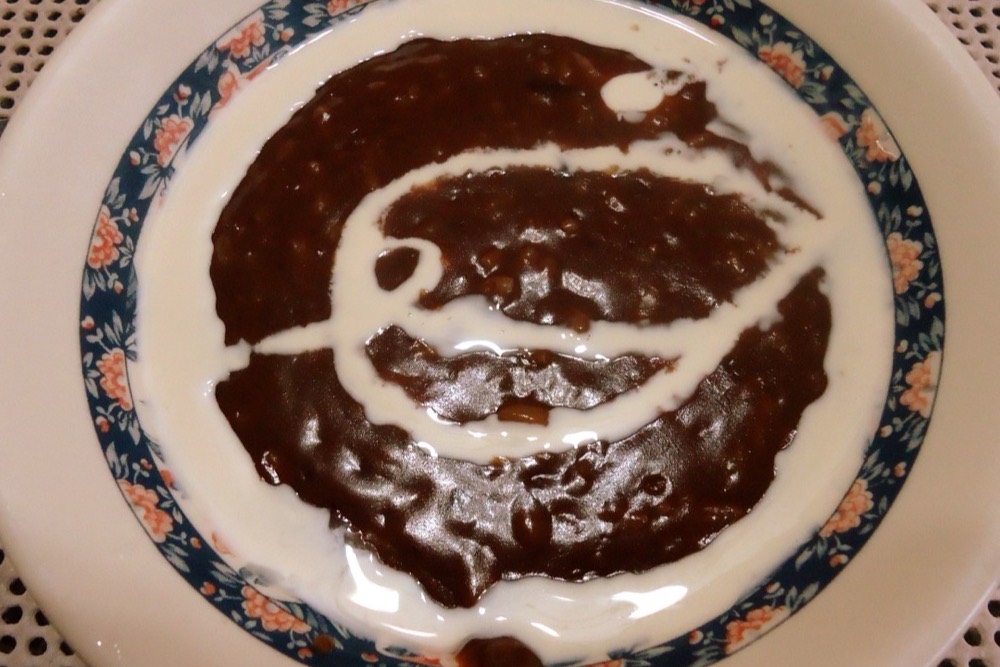
Champorado is chocolate rice porridge — sticky glutinous rice cooked with tablea (Filipino chocolate discs) into a warm, thick, cocoa-rich breakfast. It is comfort food for cold mornings, traditionally drizzled with evaporated milk and, surprisingly and wonderfully, eaten with salty dried fish (tuyo) on the side.
Ingredients
- 1 cup glutinous rice (malagkit)
- 4 cups water
- 4 tablea discs (or 1/4 cup unsweetened cocoa powder)
- 1/2 cup sugar, to taste
- Pinch of salt
- Evaporated milk, to serve
Instructions
- Rinse the glutinous rice, then bring the water to a boil in a pot.
- Add the rice and cook over medium heat, stirring often to prevent sticking, until the grains are soft and the mixture thickens, about 20 minutes.
- Dissolve the tablea (or cocoa) in a little hot water, then stir it into the rice until evenly chocolatey.
- Add the sugar and a pinch of salt. Cook, stirring, until thick and glossy. Add a splash more water if it gets too stiff.
- Ladle into bowls and serve hot, drizzled with evaporated milk. For the classic pairing, serve with fried tuyo (dried fish) on the side.
Curious which Filipino dish matches your personality? Take the Pinoy Food Personality Test or browse the full Filipino Food Guide.
Ingredient Notes
Glutinous rice (malagkit) is not optional. Despite the name it contains no gluten — the word describes the texture. Its starch is almost entirely amylopectin, the branched kind that dissolves into the cooking water and thickens it. That is the entire mechanism behind champorado: the porridge body comes from the rice itself, not from any added thickener. Jasmine, basmati, or ordinary long-grain rice will simply not produce it. Short-grain sushi rice is the least-bad substitute if you are stuck, but it still falls short.
Tablea is roasted cacao nibs ground and pressed into discs, and nothing else — no sugar, no milk solids, no emulsifier. It is slightly gritty by nature, and that faint texture is part of what real champorado tastes like. Filipino brands from Batangas and Davao are widely available; if you buy tablea, note the packet is unsweetened, so all the sweetness in the finished dish comes from the sugar you add. Unsweetened cocoa powder is the honest substitute at roughly a quarter cup. What to avoid is any sweetened drinking-chocolate mix, which takes the sugar decision out of your hands and usually lands too sweet.
The pinch of salt does real work. It is small enough to be invisible on the ingredient list and large enough that leaving it out makes the chocolate taste flat and one-note. Salt sharpens perceived chocolate flavour more reliably than adding more cacao does.
Evaporated milk, not fresh milk. This is a genuine difference, not a shelf-stability compromise. Evaporated milk is concentrated, so it adds creaminess without thinning the porridge, and it has a faint cooked-caramel note from the evaporation process that Filipinos associate with the dish. Fresh milk waters it down. Condensed milk works if you cut the sugar accordingly, since it is already sweetened.
Common Mistakes
Not stirring often enough. Glutinous rice is sticky by definition, and it will weld itself to the bottom of the pot given ten unattended minutes. Once it scorches, the burnt taste spreads through the entire batch and cannot be removed. Stir regularly, scraping the bottom, for the full cooking time. This is a dish that wants your attention.
Adding the chocolate dry. Tablea or cocoa dropped straight into hot starchy rice seizes into lumps that never fully disperse. Dissolve it in a little hot water first and stir the resulting slurry in. Thirty seconds of preparation prevents the most common textural failure.
Cooking it to the thickness you want to eat. Champorado keeps thickening off the heat, and it thickens a lot. Take it off the stove looser than seems right — noticeably soupy, even — and it will settle into the correct consistency in the bowl. Cook it to the right thickness in the pot and you will be serving chocolate cement.
Adding the sugar too early. Sugar interferes with how the rice grains hydrate, so rice cooked in an already-sweet liquid takes longer to soften and can stay stubbornly firm in the centre. Cook the rice first, sweeten after.
Judging the sweetness while it is hot. Heat suppresses perceived sweetness. Porridge that tastes correctly balanced straight off the stove will taste noticeably sweeter once it cools to eating temperature. Aim slightly under.
Variations
The most common variation is the milk. Stirring coconut milk in at the end instead of finishing with evaporated milk gives a richer, faintly tropical version popular in coconut-growing regions. Some cooks use a mix of both. Others cook the rice in coconut milk from the start, which is more decadent and needs a closer eye to avoid scorching.
Champorado is also served cold in hot weather — chilled until firm, then loosened with milk, which is essentially a chocolate rice pudding and is how many children prefer it. A related but separate dish is arroz caldo, the savoury chicken-and-ginger rice porridge that occupies the same comfort-food role without the chocolate. For the wider context of Filipino morning eating, see the Filipino Breakfast Guide.
Serving, Storage & Make-Ahead
Serve hot in a bowl with evaporated milk poured over the top in a spiral — deliberately not stirred in, so each spoonful catches some. The traditional partner is fried tuyo (salted dried herring) or daing, eaten alongside rather than mixed in. The sweet-salty combination is one of the more surprising pairings in Filipino cooking and one of the most defended; skipping it makes a perfectly good breakfast, but it is not the full experience.
Champorado is rainy-season food. It appears on Filipino tables most often during the wet months and on cold mornings, and it is as common as an afternoon merienda as it is at breakfast.
It keeps three to four days refrigerated in a covered container and will set nearly solid — that is the starch retrograding as it cools, and it is completely reversible. Reheat gently on the stove or in short microwave bursts with a splash of water or milk stirred through until it loosens. Do not freeze it; the texture turns grainy and separates on thawing. Making it a day ahead works fine, so long as you plan on adding liquid when you reheat.
Frequently Asked Questions
Can I use regular rice instead of glutinous rice for champorado?
You can make something edible, but it will not be champorado. Glutinous rice is high in amylopectin starch, which is what gives the porridge its thick, sticky, spoon-coating body. Regular long-grain rice releases far less of that starch and produces a loose, watery result with separate grains floating in chocolate liquid rather than a unified porridge.
What is tablea and what can I use instead?
Tablea is pure roasted, ground cacao pressed into discs — unsweetened, slightly gritty, and much more intense than drinking chocolate. If you cannot find it, unsweetened cocoa powder is the practical substitute; use about a quarter cup and expect a smoother but less complex result. Avoid sweetened cocoa mixes, which make the sugar impossible to control.
Why do Filipinos eat champorado with salty dried fish?
For the same reason salt goes in caramel or chocolate goes with chili — the contrast makes both sides taste stronger. Fried tuyo is intensely salty and oily, and a bite of it between spoonfuls of sweet chocolate porridge resets the palate so the sweetness never becomes cloying. It sounds wrong to most people who have not tried it and makes complete sense after one mouthful.
Why did my champorado turn out lumpy?
The chocolate was added dry, or the rice was not stirred enough. Dissolve the tablea or cocoa in a little hot water first so it goes in as a smooth slurry rather than clumping the moment it touches the starch. And stir the rice regularly throughout cooking — glutinous rice settles and sticks to the bottom of the pot within minutes if left alone.
How do I reheat champorado that has gone solid?
Warm it gently in a pot with a splash of water or milk stirred in, breaking it up as it loosens. Refrigerated champorado sets almost firm because the starch retrogrades as it cools; this is normal and fully reversible. Add liquid a little at a time, since it is easy to overshoot and end up with chocolate soup.
About the author
Sam is Korean, a former MBTI skeptic, and the person who built this site. Not a professional chef or a food historian — an enthusiast who cooks the dishes, does the reading, and cross-checks the history against documented Philippine culinary sources. Corrections are welcome and get made. Read the full story.