Filipino Chicken Adobo
The Philippines' unofficial national dish — soy, vinegar, garlic, and patience
By Sam · Published July 3, 2026 · Updated July 21, 2026
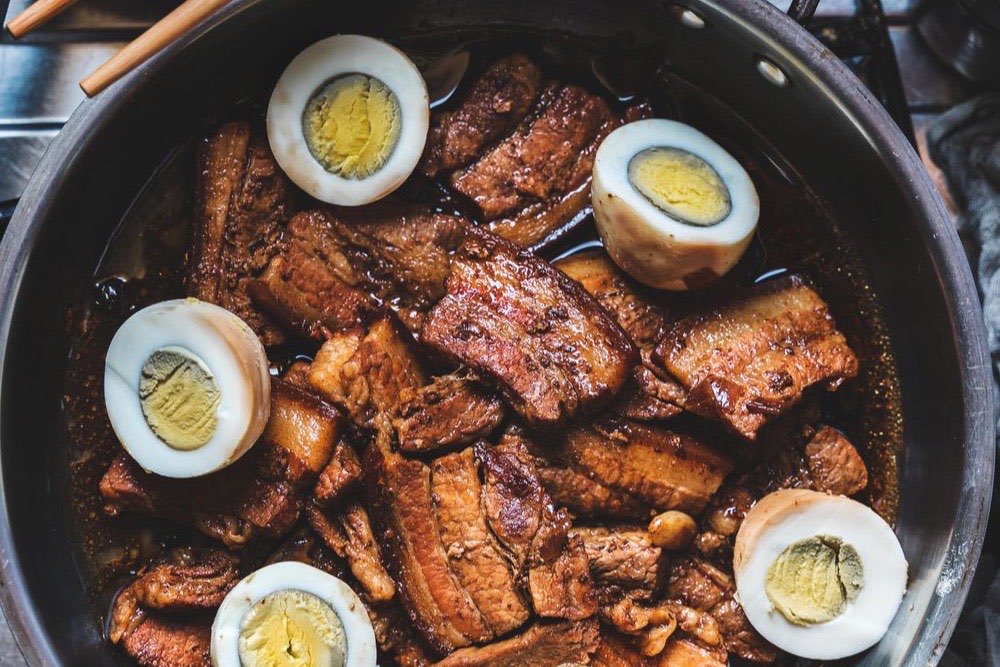
Adobo is the dish most Filipinos learn first and argue about forever. At its heart it is astonishingly simple: meat braised in vinegar and soy sauce with garlic, bay leaves, and peppercorns. The vinegar preserves and brightens, the soy deepens, and slow simmering turns the two into a glossy, savory-sour sauce. There is no single correct adobo — this is a reliable, everyday version you can make your own.
Ingredients
- 1 kg chicken thighs and drumsticks
- 1/2 cup soy sauce
- 1/2 cup white or cane vinegar
- 1 whole head garlic, crushed
- 3 dried bay leaves
- 1 tsp whole black peppercorns
- 1 cup water
- 2 tbsp cooking oil
- 1 tbsp brown sugar (optional)
Instructions
- Marinate the chicken in the soy sauce and crushed garlic for at least 30 minutes.
- Heat the oil in a pot over medium-high heat and brown the chicken on all sides. Set the marinade aside — do not discard it.
- Pour in the reserved marinade, vinegar, water, bay leaves, and peppercorns. Let it come to a boil WITHOUT stirring, so the raw sharpness of the vinegar cooks off.
- Lower the heat, cover, and simmer for 30 to 40 minutes, until the chicken is tender and the sauce has deepened.
- Uncover, stir in the brown sugar if using, and let the sauce reduce until slightly thick and glossy. Serve hot over steamed rice.
Curious which Filipino dish matches your personality? Take the Pinoy Food Personality Test or browse the full Filipino Food Guide.
Ingredient Notes
Vinegar is the ingredient that decides whether your adobo tastes Filipino. Cane vinegar (sukang maasim — Datu Puti is the household standard) is the default: clean, sharp, around 4–5% acidity, with none of the sweetness that would blur the sauce. Coconut vinegar (sukang tuba) is slightly softer and a little funky in a good way. Plain white distilled vinegar works if that is what you have. What does not work is rice vinegar, which is too mild to stand up to the soy, or anything aged and sweet like balsamic or apple cider — those turn the sauce cloying.
Soy sauce matters more than people expect. Filipino soy sauce (Silver Swan, Datu Puti) is thin, salt-forward, and comparatively simple — it seasons without dominating. Japanese shoyu like Kikkoman is more brewed and aromatic, so if that is what is in your kitchen, start with a little less and taste before you commit. Never substitute dark or sweet soy sauce; the sugar content will scorch when you reduce the sauce at the end.
Chicken thighs and drumsticks are not a preference, they are a requirement. Dark meat has enough fat and connective tissue to survive forty minutes of simmering and come out tender. Breast meat cooked the same way turns stringy and dry. Bone-in pieces are better than boneless — the bones release gelatin that gives the finished sauce its body and shine.
Garlic should be crushed, not minced. A crushed clove releases its flavor slowly into the braise; minced garlic scorches during the browning stage and leaves a bitter edge that you cannot cook back out. Use the whole head. It sounds like a lot and it is not. Peppercorns go in whole for the same reason — ground pepper clouds the sauce and gives it a dusty texture. Three bay leaves is the ceiling; more starts tasting medicinal.
Common Mistakes
Stirring when the vinegar goes in. This is the one rule every Filipino cook repeats, and it is the mistake that ruins the most adobo. Let the pot come to a full boil uncovered for two or three minutes before you touch it, so the sharpest acid cooks off. Stir too early and the raw vinegar bite stays in the sauce all the way to the table.
Skipping the browning step. It is tempting — everything is going into liquid anyway. But browning builds the fond on the bottom of the pot that gives adobo its depth. Skip it and you get a sauce that tastes flat and one-dimensional, no matter how long you simmer it.
Too much liquid. Adobo is a braise, not a soup. The liquid should come about two-thirds of the way up the chicken, no higher. Drown it and the sauce will never reduce to the glossy consistency that makes the dish, and you will end up with pale boiled chicken swimming in salty broth.
Reducing on high heat at the end. Soy sauce concentrates fast and scorches faster. Keep the final reduction at medium and stay near the pot. A sauce taken thirty seconds too far goes bitter and aggressively salty, and there is no rescuing it.
Adding more soy sauce at the end because it "needs salt." It does not — it needs to finish reducing. Judge the seasoning only after the sauce has thickened, because everything concentrates as the liquid cooks away.
Variations
Once the base is solid, adobo bends easily. Stir in half a cup of coconut milk during the last ten minutes for adobo sa gata, richer and rounder, common in Bicol and southern Luzon. Leave out the soy sauce entirely and season with salt alone for adobong puti — the older, pre-colonial version, cleaner and much more sharply sour. Increase the vinegar and cut the water for the assertive Batangas style. Use half pork belly and half chicken for the combination version many families default to at home.
Leftovers have their own dish: shred the meat, fry it hard in a little oil until the edges crisp, and you have adobo flakes, served over garlic rice with a fried egg. For a fuller tour of how the dish changes across the archipelago, read Adobo Regional Variations.
Serving, Storage & Make-Ahead
Serve adobo hot over steamed white rice, and be generous with the sauce — spooning it over the rice is the entire point of the dish. A fried egg on top turns it into a complete meal. Atchara (pickled green papaya) on the side is the traditional counterweight; its sweet-sour crunch cuts the richness in a way that plain vegetables do not.
Adobo keeps in the refrigerator for four to five days in a covered container, and it genuinely improves overnight — the vinegar and soy finish penetrating the meat, and the harsher edges settle into something rounder. This keeping quality is not a happy accident. The dish evolved as a preservation method in a tropical climate long before refrigeration, which is exactly why it is built on acid and salt.
It freezes well for up to three months. Reheat gently on the stovetop rather than in the microwave, adding a splash of water if the sauce has tightened too much, and stop as soon as it is hot through — the chicken is already fully cooked and will only toughen from here.
Frequently Asked Questions
Why shouldn't you stir adobo when the vinegar goes in?
Letting the pot boil undisturbed for a couple of minutes gives the sharpest, most volatile acid a chance to cook off before it gets worked into the sauce. Stir immediately and that raw vinegar bite stays put. Filipino cooks pass this down as a firm rule, and it is worth following whether or not you care about the chemistry behind it.
Can I make adobo without soy sauce?
Yes, and it has its own name: adobong puti, or white adobo. Replace the soy sauce with salt and keep everything else the same. It is the older form of the dish, predating the Chinese-introduced soy sauce that most people now consider essential. The result is paler, cleaner, and noticeably more sour — worth cooking at least once to understand what adobo actually is underneath the soy.
What is the best vinegar for adobo?
Filipino cane vinegar is the standard and the safest choice. Coconut vinegar is a close second with a slightly softer, funkier character. White distilled vinegar is a perfectly acceptable substitute. Avoid rice vinegar, which is too weak to balance the soy sauce, and avoid sweet or aged vinegars like balsamic and apple cider, which push the sauce in the wrong direction entirely.
Can I use chicken breast instead of thighs?
You can, but it will not be as good. Breast meat lacks the fat and connective tissue that let dark meat stay tender through a long braise, so it tends to come out dry and stringy. If breast is all you have, cut the simmering time to about fifteen minutes and add the meat after the sauce has already developed.
Why does adobo taste better the next day?
Time lets the salt and acid finish working their way into the meat, and it lets the sharper flavors in the sauce settle and integrate. The dish that tastes assertive and slightly disjointed straight off the stove tastes rounded and unified after a night in the refrigerator. Many families deliberately cook adobo a day ahead for this reason.
About the author
Sam is Korean, a former MBTI skeptic, and the person who built this site. Not a professional chef or a food historian — an enthusiast who cooks the dishes, does the reading, and cross-checks the history against documented Philippine culinary sources. Corrections are welcome and get made. Read the full story.