How Your Personality Type Shapes Your Food Preferences
The Surprising Psychology of Personality and Food
By Sam · Published March 5, 2026
The Hidden Connection Between Who You Are and What You Eat
Have you ever wondered why your friend insists on trying every new restaurant while you'd rather order your reliable favorite? Or why some people meticulously plan their meals while others eat whatever catches their eye in the moment? The answer may lie deeper than simple preference — it may be woven into your personality type.
Research in personality psychology and behavioral science has revealed fascinating connections between personality traits and food choices. While the MBTI framework is primarily a tool for understanding interpersonal dynamics, the four dimensions it measures — Energy (E/I), Information (S/N), Decisions (T/F), and Lifestyle (J/P) — each correlate with distinct patterns in food behavior.
Extraversion vs. Introversion: How You Experience Food Socially
The Extraversion-Introversion dimension doesn't just describe whether you're outgoing or reserved — it profoundly shapes your relationship with food as a social experience.
Extraverts (E) tend to view eating as a social event. They gravitate toward communal dining experiences, food festivals, and restaurants with lively atmospheres. In Filipino culture, Extraverts are often the ones organizing boodle fights, planning potlucks, and insisting the whole barkada (friend group) goes out for samgyupsal. They're more likely to enjoy bold, attention-commanding dishes — think Crispy Pata sizzling at the center of the table or a colorful Halo-Halo tower.
Introverts (I) tend to value food as a personal, intimate experience. They prefer quiet meals at home or small gatherings over crowded restaurants. They often develop deep appreciation for specific flavors and may become quietly passionate experts on particular cuisines or cooking techniques. In our personality test, introverted types match with dishes that reward depth and contemplation — Kapeng Barako's bold complexity, Balut's hidden layers, or Sinigang's comforting familiarity.
Sensing vs. Intuition: What Draws You to a Dish
This dimension reveals perhaps the most significant personality-food connection: how you process and prioritize sensory information.
Sensors (S) are drawn to the tangible, physical aspects of food. They notice textures, appreciate presentation, and tend to prefer foods with clear, recognizable flavors. Sensors often develop strong loyalty to specific dishes and restaurants, valuing consistency and quality. They may be the ones who notice that a recipe has changed or that the rice has a slightly different texture today. Filipino dishes that appeal to Sensors emphasize craftsmanship and tradition — the perfect crunch of Lumpia Shanghai, the precise sourness of Sinigang, or the consistent reliability of Adobo.
Intuitives (N) are more attracted to the concept, story, or novelty of food. They're the ones reading about food history, interested in fusion cuisine, and willing to try unusual flavor combinations. They may be less concerned with a dish being "perfect" and more interested in it being "interesting." In our test, Intuitives match with dishes that carry deeper meaning or creative complexity — Sisig's story of reinvention, Kare-Kare's layered complexity, or Halo-Halo's creative chaos.
Thinking vs. Feeling: Why You Choose What You Choose
The Thinking-Feeling dimension influences the criteria you use when making food decisions.
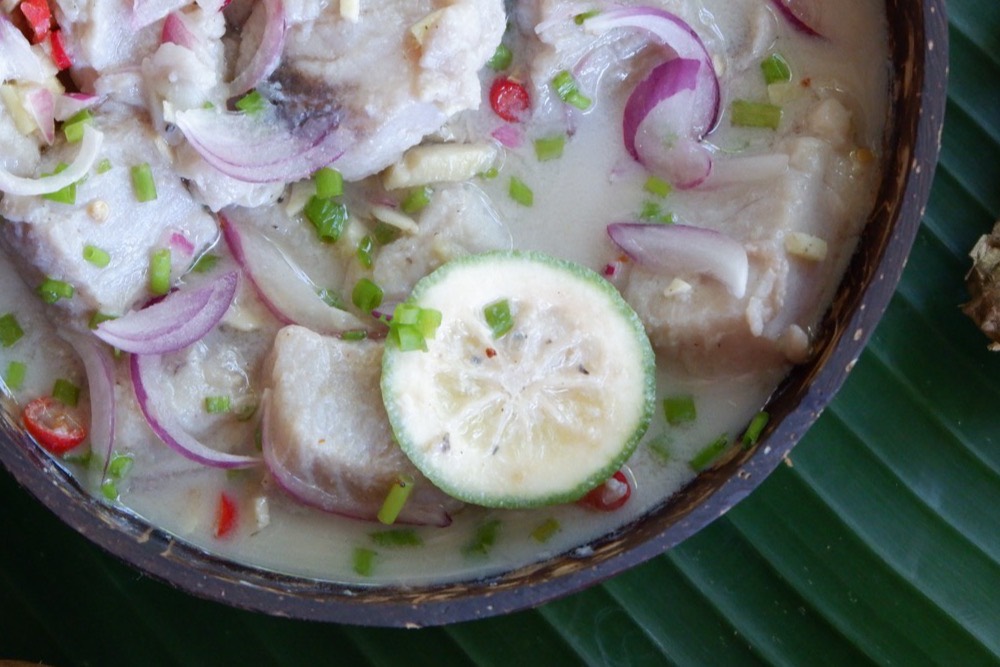
Thinkers (T) approach food decisions analytically. They consider nutritional value, cost-effectiveness, and efficiency. They're more likely to meal-prep, follow specific dietary guidelines, and evaluate restaurants based on objective quality metrics. When choosing a Filipino dish, Thinkers appreciate the functional elegance of Pancit Canton (efficient, versatile, filling) or the strategic simplicity of Kinilaw (fresh, no-nonsense, direct). They may also be drawn to understanding the science behind cooking techniques.
Feelers (F) make food choices based on emotional resonance, memories, and interpersonal connection. They eat Champorado because it reminds them of rainy mornings with family. They order Sinigang because it feels like a warm hug. They bake Buko Pie because it makes others smile. For Feelers, the emotional context of a meal matters as much as (or more than) the food itself. They're the ones who remember everyone's dietary restrictions and ensure every gathering has dishes that make everyone feel included.
Judging vs. Perceiving: How You Approach Mealtime
This final dimension reveals your eating patterns and meal-related behaviors.
Judgers (J) prefer structured eating habits. They eat at consistent times, plan meals in advance, and may feel uncomfortable with spontaneous dining changes. They appreciate dishes with clear preparation methods and predictable outcomes. Filipino Judgers might be the ones who always have Adobo rice in the freezer, who know exactly which carinderia serves the best Sinigang, and who organize family meal schedules with precision.
Perceivers (P) embrace spontaneity in their eating habits. They eat when hungry (not when the clock says to), enjoy discovering new food stalls, and might eat dessert before dinner just because they felt like it. They're the friends who suggest "let's just walk around and see what looks good" rather than making reservations. Perceiver-matched dishes in our test tend to be spontaneous and free-spirited — Isaw grabbed from a street vendor, Balut bought on a whim from a passing vendor, or Halo-Halo mixed in whatever creative combination strikes the mood.
The Filipino Food Connection
What makes Filipino cuisine particularly fascinating for personality-food analysis is its inherent diversity. The Philippines has dishes that speak to every personality dimension — from the methodical preparation of Lechon (a Judger's dream of planned perfection) to the spontaneous street food culture of Isaw and Kwek-kwek (a Perceiver's paradise).
Filipino food also uniquely bridges the social dimensions. The culture of "kainan tayo" (let's eat together) means that even Introverts participate in communal dining, while the deep comfort of solo merienda snacks gives Extraverts their moments of quiet food appreciation.
This is what makes the Pinoy Food Personality Test more than just a fun quiz — it's a lens through which you can understand yourself better through the rich, diverse world of Filipino cuisine. When you discover that your personality matches Champorado or Sisig or Taho, it's not random — it reflects real patterns in how your personality type relates to the world, including the food that nourishes you.
Take the quiz and discover your own food personality match. You might be surprised at how accurately a Filipino dish can capture who you really are.
About the author
Sam is Korean, a former MBTI skeptic, and the person who built this site. Not a professional chef or a food historian — an enthusiast who cooks the dishes, does the reading, and cross-checks the history against documented Philippine culinary sources. Corrections are welcome and get made. Read the full story.